
My Analysis
It is the same old wickedness of the evil western neo-liberal imperialists like Britain and USA. Their plan is to project the dictator and murderer Paul Kagame as an international humanitarian in order to disguise the evil schemes of Kagame inside DR Congo. Kagame and Museveni have killed over one million people in DR Congo amidst global silence. They are being used neo-liberal imperialists to create confusion through militias as Western Corporations loot and plunder gold, copper, tin , coltan etc from the DRC. Museveni and Kagame have a plan of creating a Tusi empire in DR Congo. They want to chop off a mineral rich territory from Congo in order to add it to Rwanda. They are supporting M23 rebels which is basically a Tusi or Rwandese militia inside DR Congo in order to achieve their dream.
Must watch
Obama, the US and 5 Million Deaths in The Congo
http://www.youtube.com/watch?v=wHduddO7ZaU
Congo: Chaos By Design
http://www.youtube.com/watch?v=QiJ0JC3LzEo
MUST READ
It is a neo-liberal ploy to loot Congo resources Stupid! US backed M23 rebels fighting in eastern Congo force hundreds into Uganda
https://watchmanafrica.blogspot.com/2021/11/it-is-neo-liberal-ploy-to-loot-congo.html
The Wickedness of American Backed Neo-liberal regimes: Did Museveni’s banditry state bomb citizens in Kampala as a pretext to go to DR Congo to loot mineral resources??
https://watchmanafrica.blogspot.com/2021/12/the-wickedness-of-american-backed-neo.html
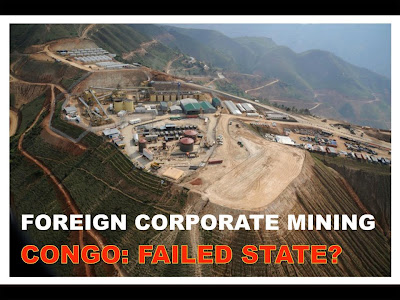
Inside the western heart of darkness : The so called Western Pan African African Multi-national Companies looting mineral resources from D.R.Congo
http://watchmanafrica.blogspot.com/2013/11/inside-western-heart-of-darkness-so.html
When Mercenaries of Babylon US reduce the poor to mere biological substances: Congolese refugees influx worries leaders in Kisoro
https://watchmanafrica.blogspot.com/2018/02/when-mercenaries-of-babylon-us-reduce.html
Helping US corporations and Neo-liberal slave states to primitively accumulate mineral resources in DR Congo: Uganda to build 223km road network inside DRC: Feeding your neighbour’s kids as your own kids starve to death is a very bogus idea
https://watchmanafrica.blogspot.com/2020/10/helping-us-corporations-and-neo-liberal.html
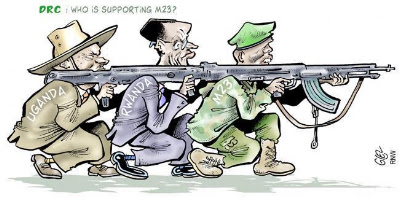
which other player is missing???? The USA of course
Fooling us about Uganda’s neutrality in the Congo Conflict!!! Militarizing the Congo to help USA and allies to rape Congo resources: DRC troops, civilians fleeing to Uganda after rebel clashes
http://watchmanafrica.blogspot.com/2012/07/fooling-us-about-ugandas-neutrality-in.html
End of the M23 Era but no end yet to USA and her clients’ looting of Congo resources : Kabila Congratulates Congo Army for Defeating M23 Rebels: FARDC captured Ugandan and Rwandan Nationals fighting alongside M23 Rebels
http://watchmanafrica.blogspot.com/2013/10/end-of-m23-era-but-no-end-yet-to-usa.html
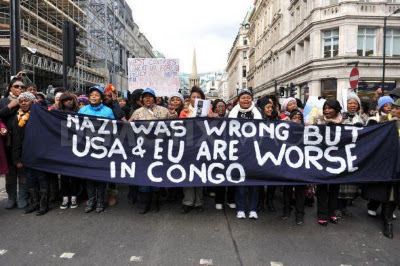
THE THIRD WORLD AS A MODEL FOR THE NEW WORLD ORDER
http://www.antipasministries.com/html/file0000156.htm
CHRISTIANS IN AFRICA: AWAKE! America and the American Church Are Not Your Friends
http://www.antipasministries.com/html/file0000234.htmDR Congo army accuses Rwanda of deploying soldiers 'to defend M23'
What you need to know:
- The army, known by its French acronym FARDC, said at least 500 Rwandan troops have joined M23 in Rutshuru, North Kivu, in the east of the Democratic Republic of Congo close to the border between the two countries.
The army, known by its French acronym FARDC, said at least 500 Rwandan troops have joined M23 in Rutshuru, North Kivu, in the east of the Democratic Republic of Congo close to the border between the two countries.
In a statement issued on Wednesday night, the Congolese army said: “Rwanda has deployed in the vicinity of Tchanzu (in North Kivu) 500 Special Forces soldiers, all dressed in new green-black uniforms and wearing the helmets of its Special Force".
“Worse still, the M23 terrorists, supported by their natural mentor Rwanda, intentionally attacked Monusco [the UN mission in the DRC] in Muhati, in Rutshuru territory. Yet the Monusco force is in full exercise of its mission in accordance with the mandate of the UN Security Council,” the statement added.
Rwanda did not immediately respond to these fresh accusations.
Last week, the DRC accused Rwanda of backing the M23, but Kigali denied the accusations saying the M23 issue is a Congolese matter. The Rwandan army also accuses DR Congo of being in alliance with the FDLR, the armed group that settled in the Kivus after fleeing Rwanda in 1994 after the Genocide against the Tutsi.
According to the Congolese army, during the attacks of June 8, three Tanzanian peacekeepers were injured, with one of them nursing serious injuries.
The FARDC also states that “since the arrest of the Rwandan special forces soldiers in Rutshuru territory, Rwanda has changed the uniforms of these soldiers to conceal its presence in Congolese territory alongside the M23 terrorists.”
On May 28, the Congolese army detained two Rwandan soldiers whom it accused of trespassing into DRC territory. Rwanda, however, said the soldiers were abducted as they patrolled the country’s border with DRC following conflict near the area.
Last week, DRC agreed to free the Rwandan soldiers following mediation efforts. According to Congolese Foreign Minister Christophe Lutundula, the Rwandan soldiers will be handed over to President João Lourenço, chairperson of the International Conference on the Great Lakes, who has been tasked by the African Union to mediate between Rwanda and the DRC.

DR Congo's Tshisekedi accuses Rwanda of backing rebels
https://www.monitor.co.ug/uganda/news/dr-congo-s-tshisekedi-accuses-rwanda-of-backing-rebels-3839622
His remarks were just the latest exchange against the background of the resurgence of the M23 rebels active in the east of the country, near the border with Rwanda.
"I have always maintained that you have to build bridges rather than walls," said Tshisekedi on state television, in his first public remarks on the growing crisis between the two countries.
The African Union and UN have both called for calm.
M23 fighters captured Goma in 2012 before the army drove them from the city and crushed their rebellion.
However, the militia took up arms again in late 2021 after accusing the government of having failed to respect a 2009 agreement that foresaw incorporating its fighters into the army.
"Unfortunately, today, we are where we are."
DR Congo's neighbours should not mistake its desire for peace with weakness, he added.
"That does not constitute an opportunity for neighbours to come and provoke us," he said.
"I hope that Rwanda has learned this lesson, because, today, it's clear, there is no doubt, Rwanda has supported the M23 to come and attack the DRC."
Tshisekedi's was speaking as he visited Kinshasa's western neighbour, Congo-Brazzaville, for talks with President Denis Sassou Nguesso.
Kinshasa has accused Rwanda of backing the M23 rebels, who have been involved in a series of clashes with the army since the end of May, allegations Kigali has denied.
Kinshasa has suspended flights of Rwandan airline RwandAir between the two countries and summoned Rwanda's ambassador to warn him of the country's position.
Relations between the DRC and Rwanda have been strained since Rwandan Hutus accused of slaughtering Tutsis during the 1994 Rwanda genocide arrived in eastern DRC en masse.
The relationship began to thaw after Congolese President Felix Tshisekedi took office in 2019 but the recent resurgence of M23 violence has reignited regional tensions.
In Britain, LGBTQ migrants fear being sent to Rwanda
https://www.monitor.co.ug/uganda/news/in-britain-lgbtq-migrants-fear-being-sent-to-rwanda-3844086
What you need to know:
- Under a controversial law passed in April, the UK plans to send asylum-seekers deemed to have arrived illegally on British soil to Rwanda, an East African country 6,000 kilometres (3,728 miles) from London, starting in mid-June.
Under a controversial law passed in April, the UK plans to send asylum-seekers deemed to have arrived illegally on British soil to Rwanda, an East African country 6,000 kilometres (3,728 miles) from London, starting in mid-June.
Sitting in a park in Manchester's Gay Village, a neighbourhood in the heart of the northern English city, Hadi -- not his real name -- told AFP about his escape from persecution and rape attempts in Iraq.
He still bears the scars.
"I was hit on the arm and back and I lost consciousness because of the pain," he said.
Hadi, who is in his twenties, sought asylum in Britain in January 2022 after crossing Europe from east to west.
When he heard about the plan to send migrants to Rwanda, he thought he was reliving his worst nightmares.
"We suffered and escaped death, we crossed the sea, all to be sent to Rwanda? Kill me or sentence me to death instead of sending me there," he said.
He described the move as "unjust and criminal", amounting to "a death sentence for all refugees" -- and urged Prime Minister Boris Johnson and interior minister Priti Patel to abandon the plan.
Although homosexuality is not banned in Rwanda, LGBTQ people are frequently sacked from their jobs, disowned by their families, deprived of medical care and sometimes beaten up.
Britain's interior ministry, the Home Office, admitted in a report to having "concerns" about the treatment of LGBTQ people in Rwanda.
'Fear'
"Why do you want to deport them to Rwanda? So that they will be persecuted more?" said Aderonke Apata, who founded the NGO "The African Rainbow Family" and helps LGBTQ migrants integrate into British society.
Apata, herself a lesbian and former asylum-seeker, said Hadi "lives in fear every second".
"He thought the UK respected gay rights... Now that he is there, he is suddenly faced with the prospect of being deported."
She expressed fears there would be "no oversight of what's happening... in detention", and argued the monitoring mechanisms set to be put in place in Rwanda are not realistic.
"Here in the UK, personally, I had a homophobic attack when I was in detention," she recalled.
"That was here in the UK. Now tell me, if people are now taken to Rwanda, who is going to protect them?
"For me, what the government is doing is a way of washing their hands of the conventions that guarantee human rights for refugees," Apata added.
The government says its plan aims to deter the growing number of migrants making the perilous journey across the English Channel.
More than 28,000 people arrived in Britain having crossed the Channel from France in small boats in 2021, compared with 8,466 in 2020, 1,843 in 2019, and 299 in 2018.
But the move has drawn strong criticism from human rights groups, which on Wednesday launched legal action to block it.
It is unclear when the first flight will be able to depart, given the court challenge.

Rwanda says UK asylum seekers to arrive 'in next few weeks'
Under a controversial law passed in April, the UK plans to send asylum-seekers deemed to have arrived illegally on British soil to Rwanda, an East African country 6,000 kilometres (3,728 miles) from London, starting in mid-June.
Sitting in a park in Manchester's Gay Village, a neighbourhood in the heart of the northern English city, Hadi -- not his real name -- told AFP about his escape from persecution and rape attempts in Iraq.
Since being announced last month, the agreement enabling Britain to send migrants and asylum seekers to Rwanda has attracted furious criticism from rights groups, opposition figures in both countries and even the United Nations.
According to the arrangement, the British government will send anyone entering the UK illegally, as well as those who have arrived illegally since January 1, to Rwanda.
In a statement released Thursday, Alain Mukuralinda, Rwanda's deputy government spokesman, said: "The UK has informed the 1st group of about 50 that they'll be relocated, and we expect to hear soon from our UK partners when they'll arrive, likely in the next few weeks."
Yolande Makolo, the government's spokeswoman, confirmed that the "migrants (were) likely to arrive in the next few weeks."
According to the Rwandan authorities, the British government will provide up to £120 million ($157 million, 144 million euros) to Kigali and migrants will be "integrated into communities across the country."
Tougher penalties
The proposals to relocate tens of thousands of people in the coming years, which is set to be challenged in British courts, has been slammed by rights groups as "inhumane".
Campaigners accuse President Paul Kagame's government of crushing dissent and keeping an iron grip on power, but while announcing the asylum deal on April 14, British Prime Minister Boris Johnson said Rwanda was "one of the safest countries in the world."
Kagame said last month that Kigali was not "trading in human beings" when it inked the agreement.
"We are actually helping," he said, describing the deal as an "innovation" put forward by Rwanda.
He argued that Rwanda, a tiny nation in Africa's Great Lakes region, has hosted refugees for "decades", mainly from neighbouring countries.
According to UN figures, Rwanda was hosting more than 127,000 refugees as of September last year, almost half of them children. The majority were Congolese, followed by Burundians.
The British government has sought to crack down on illegal immigration and last month, parliament passed controversial reforms which introduce maximum life sentences for people smugglers.
The Nationality and Borders Act also imposes tougher jail terms for anyone arriving illegally in the country, which has raised fears it could be used against asylum-seekers and refugees.